Research
Research interests first, followed by publications.
Research Interests
My research interest lies in applying computational and data-driven methods to high-dimensional omics data to uncover the molecular principles underlying cellular identity, disease heterogeneity, and therapeutic response — bridging mechanistic understanding with clinically actionable insight.
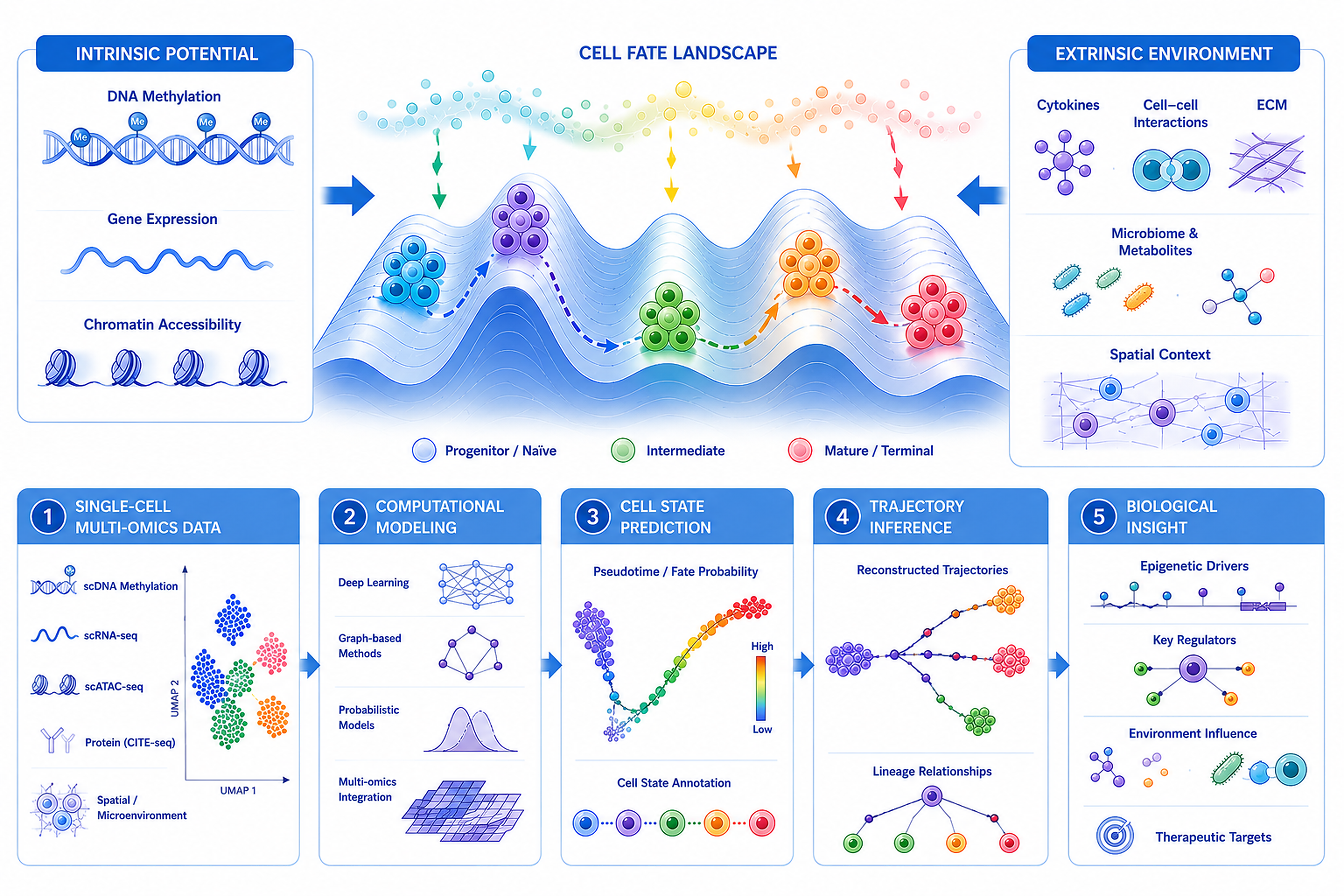
Decoding Cell States through Single-Cell Multi-Omics
Decoding the molecular logic that governs cell fate decisions is central to understanding development, tissue homeostasis, and disease. Intrinsic cellular programmes including DNA methylation, gene expression, and chromatin accessibility, alongside extrinsic signals such as cell-cell interactions, and the microenvironment, converge to shape how cells transition across states. Integrating single-cell multi-omics data with computational modelling makes it possible to reconstruct differentiation trajectories, infer lineage relationships, and identify the key epigenetic drivers and regulators orchestrating these transitions, with direct implications for uncovering therapeutic targets in disease contexts.
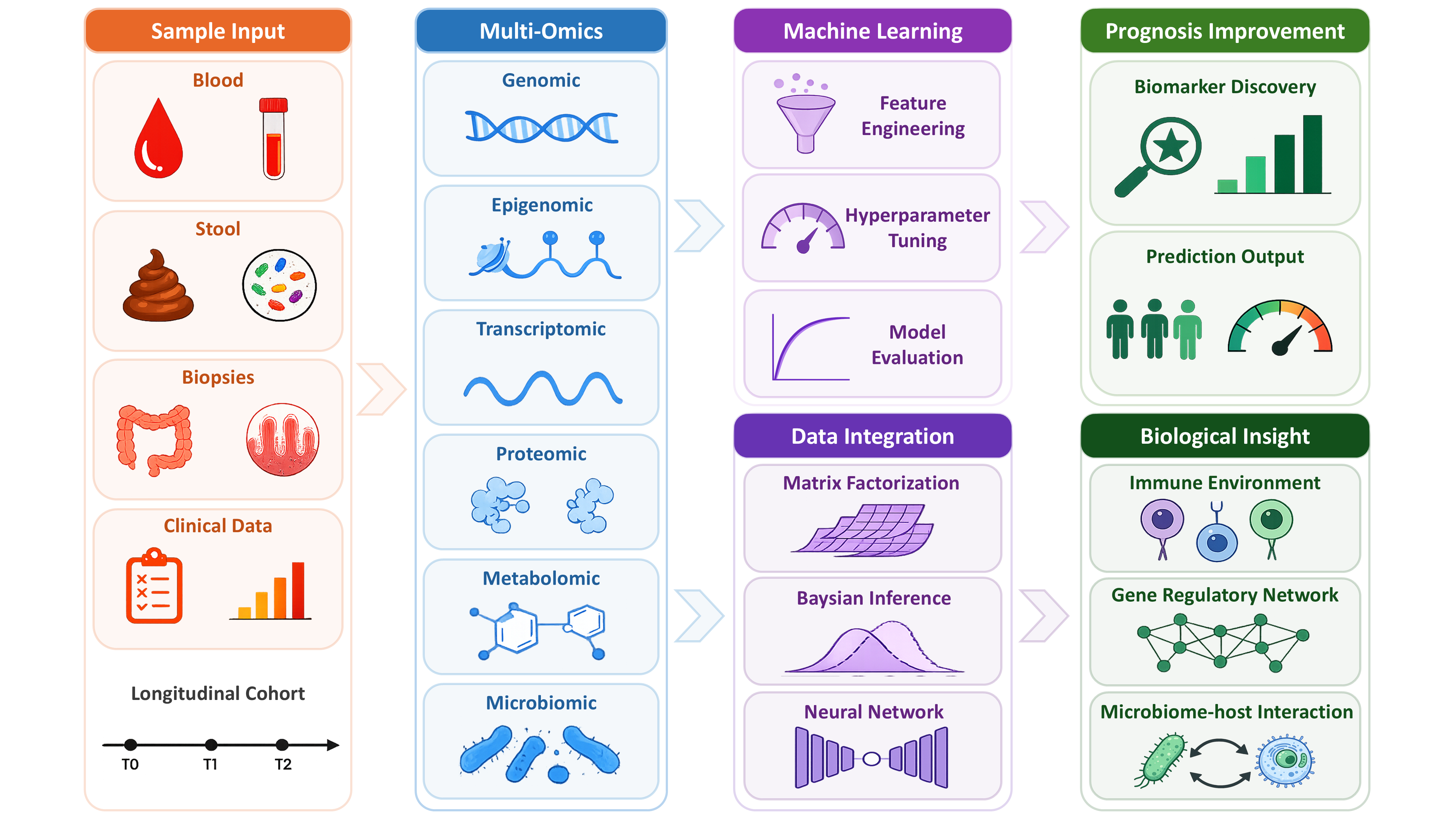
Inflammatory Bowel Disease Treatment Response
Understanding why patients with inflammatory bowel disease respond differently to the same treatment remains a fundamental clinical challenge. Addressing this requires a comprehensive, systems-level view of disease biology that goes beyond conventional clinical assessment. Diverse biological specimens collected from longitudinal cohorts and profiled across multiple molecular layers can capture the complexity of immune dysregulation, gene expression, and microbial dynamics that shape therapeutic outcomes. Applying advanced computational frameworks to these high-dimensional data holds the potential to identify robust biomarkers and translate molecular patterns into clinically actionable predictions, ultimately supporting more precise and personalised treatment decisions.
Publications
- Spatial and single-cell characterization of human glioblastoma tumor microenvironment reveals malignant cellular communities. Nature Neuroscience, 2026
- Detection of primary cancer types via fragment size selection in circulating cell-free extrachromosomal circular DNA. Genome Medicine, 2026
- Spatial Transcriptomics of Human Decidua Identifies Molecular Signatures in Recurrent Pregnancy Loss. Genomics, Proteomics & Bioinformatics, 2025
- Comparative analysis of methodologies for detecting extrachromosomal circular DNA. Nature Communications, 2024
- eccDNA-pipe: an integrated pipeline for identification, analysis and visualization of extrachromosomal circular DNA from high-throughput sequencing data. Briefings in Bioinformatics, 2024
- Nickle-cobalt alloy nanocrystals inhibit activation of inflammasomes. National Science Review, 2023
- Benchmarking spatial and single-cell transcriptomics integration methods for transcript distribution prediction and cell type deconvolution. Nature Methods, 2022